Perched dramatically above the Mtkvari River in the Shida Kartli region, Uplistsikhe is a labyrinthine rock-hewn city that has witnessed the rise and fall of empires over three millennia. This extraordinary troglodyte settlement offers a window into the soul of early Georgian civilization, where pagan temples, royal halls, and wine cellars are all sculpted directly from the living volcanic rock.
Uplistsikhe, whose name translates from Georgian as 'the Lord's Fortress,' is one of the oldest urban settlements in the entire Caucasus region. Archaeological evidence confirms that human habitation at the site dates back to the late Bronze Age, roughly the second millennium BCE, making it well over 3,000 years old. Situated near the modern town of Gori in central Georgia, the settlement was carved into a dramatic cliff of volcanic rock overlooking the Mtkvari River. Early inhabitants recognized the strategic and spiritual significance of this commanding elevated position, and the site quickly evolved from a simple refuge into a sophisticated urban center of genuine complexity and scale.
During the early Iron Age, between the 6th and 4th centuries BCE, Uplistsikhe began its transformation into a major political and religious hub for the ancient Kartlian kingdom, known to the Greeks as Iberia. The city grew organically upward and inward through the rock, with craftsmen carving out dwelling quarters, ceremonial halls, storage pits, and wine cellars with remarkable precision. At its peak, the settlement covered approximately eight hectares and could accommodate a population estimated between 20,000 and 30,000 people. The sheer density of carved architecture, connected by tunnels, staircases, and open streets, reveals a highly organized society with sophisticated urban planning sensibilities unusual for its era.
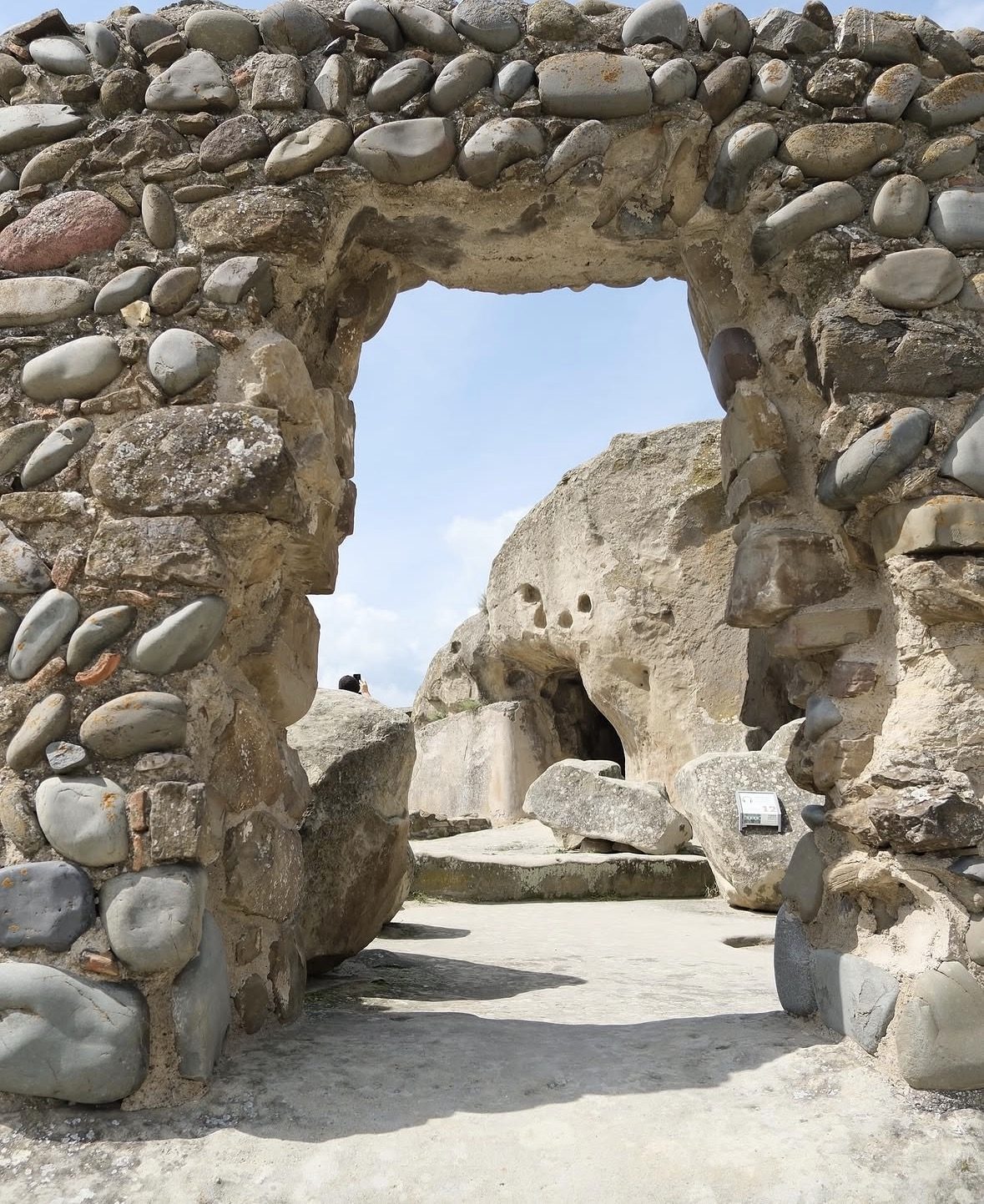
Uplistsikhe's cultural landscape is uniquely layered, reflecting centuries of religious and political transformation. The city was originally a major center of pagan worship, and several of its most impressive carved chambers functioned as temples dedicated to pre-Christian Georgian deities, particularly the sun goddess. One of the most striking structures is a large hall known as the 'Tamaris Darbazi' or Queen Tamar's Hall, featuring an elaborate coffered ceiling carved directly into the rock in a style that echoes classical Hellenistic architecture. This stylistic borrowing demonstrates that even in its earliest phases, Uplistsikhe was far from isolated, absorbing artistic and architectural influences from the wider ancient Mediterranean and Near Eastern worlds.
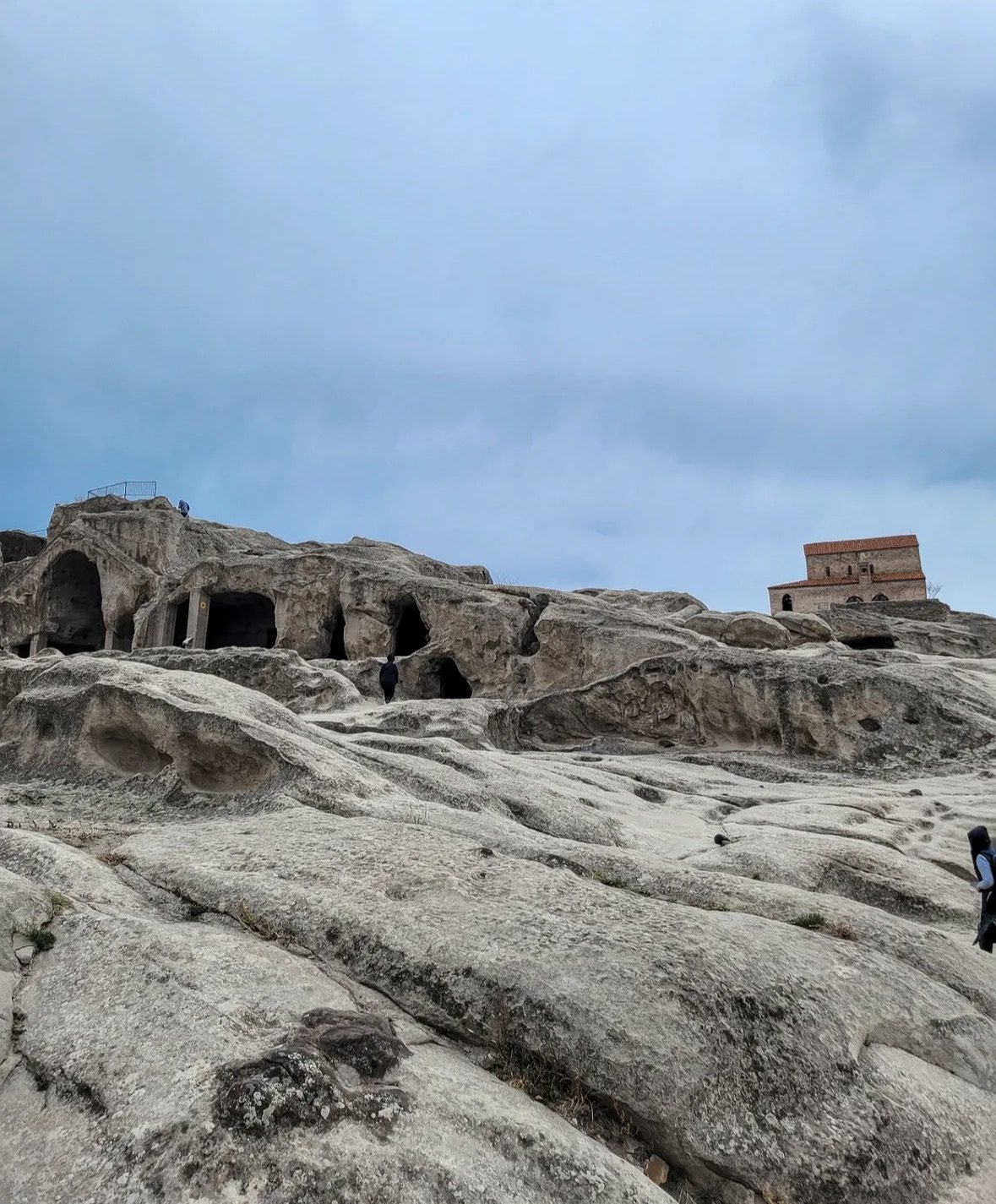
The adoption of Christianity as the state religion of Kartli in 337 CE brought sweeping changes to Uplistsikhe. Pagan temples were repurposed or demolished, and a three-nave Christian basilica was constructed atop the ruins of a major cult temple in the 9th or 10th century CE. This church, known today simply as the Uplistsikhe Church, remains one of the most evocative structures on the site, its stone walls still standing against the open sky. The deliberate overlaying of Christian architecture onto pagan foundations was a calculated act of religious supersession, physically embedding the new faith into the very bedrock of the old order and signaling the city's full integration into the Christian Georgian cultural sphere.
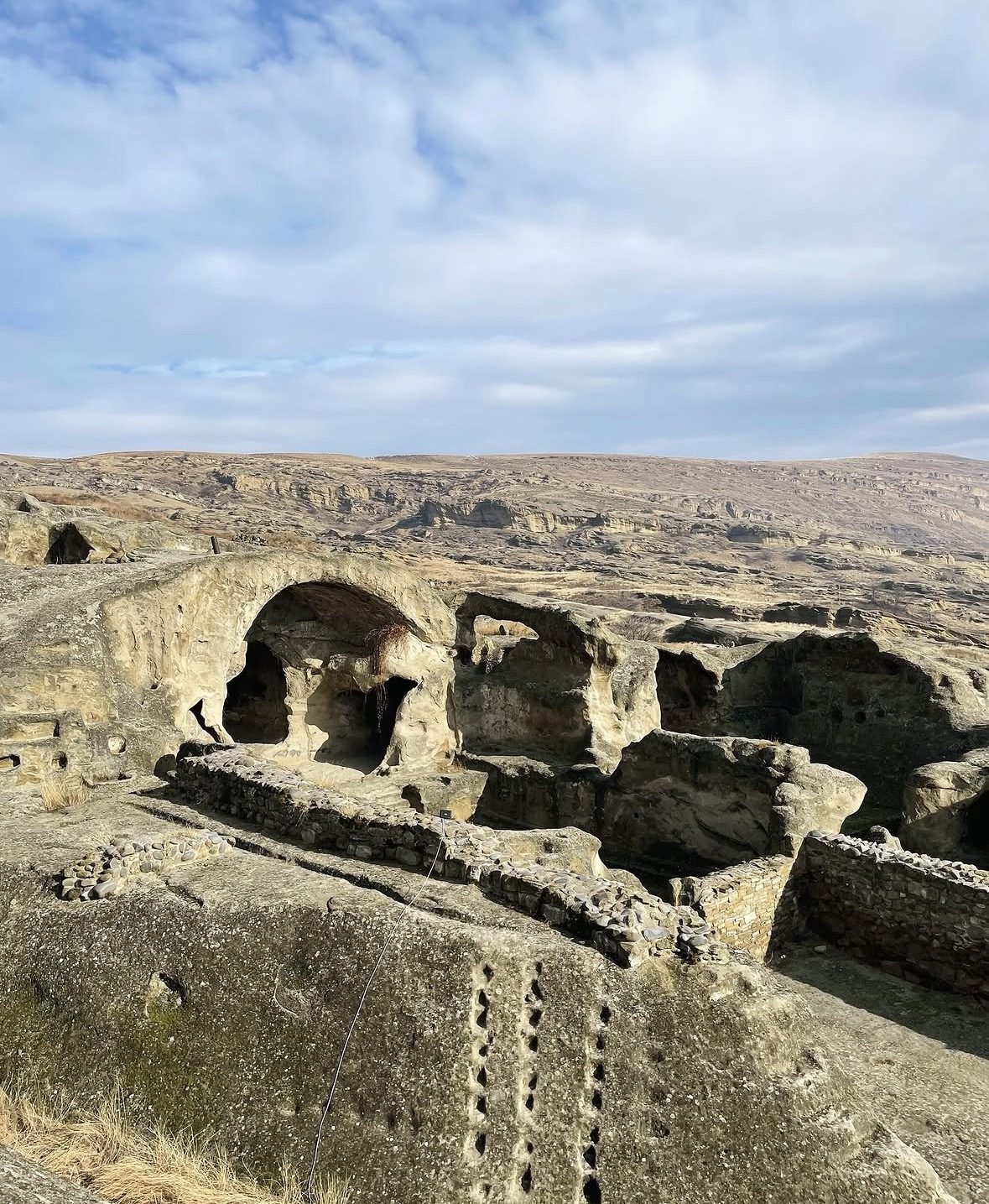
Uplistsikhe's geographic position along the ancient Silk Road trade routes amplified its importance far beyond the local region. The city sat at a critical juncture where routes connecting the Black Sea coast to the Caspian and beyond converged, making it a natural waypoint for merchants, diplomats, and pilgrims. Evidence of this cosmopolitan traffic is visible in the architectural diversity of the site, where Persian, Hellenistic, and indigenous Kartlian design elements blend seamlessly. Wine production was a cornerstone of the city's economy, with numerous large kvevri pits, the traditional Georgian clay wine vessels buried in the ground, discovered throughout the rock-cut chambers, attesting to both domestic consumption and likely commercial wine trade along these ancient routes.
Despite its formidable natural defenses, Uplistsikhe could not withstand every assault history threw at it. The city suffered significantly during the Arab invasions of the 7th and 8th centuries, when the Umayyad Caliphate extended its reach deep into the Caucasus. Yet the settlement endured and even experienced a cultural renaissance during the Georgian Golden Age under Queen Tamar in the late 12th and early 13th centuries, when art, architecture, and commerce flourished across the kingdom. It was the Mongol invasion of 1240, led by forces loyal to the successors of Genghis Khan, that delivered the decisive blow. The Mongols sacked Uplistsikhe with devastating thoroughness, massacring much of its population and triggering a permanent decline from which the city never recovered.
In the wake of the Mongol destruction, Uplistsikhe's population steadily migrated away, and the city was gradually abandoned over the following centuries. The rise of nearby Gori as a regional administrative center further sapped any remaining vitality from the rock-hewn settlement. By the late medieval period, what had once been a thriving metropolis had become little more than a ghostly labyrinth of empty chambers and crumbling facades. Remarkably, small monastic communities continued to use parts of the site for religious purposes even as the wider city fell silent, and local Georgian communities preserved oral traditions and folk memory of the site's ancient significance across the long centuries of abandonment and foreign occupation.
Scientific interest in Uplistsikhe began in earnest in the 19th century, following the Russian annexation of Georgia in 1801. Russian and Georgian scholars conducted early surveys of the site, marveling at the complexity of its carved architecture. Systematic archaeological excavations began in the Soviet era during the 1930s and continued through subsequent decades, gradually revealing the full extent of the ancient city's layout, its water supply systems, its paved main street, and the extraordinary diversity of its carved interiors. These excavations transformed academic understanding of early Caucasian urbanism and confirmed Uplistsikhe's status as one of the most significant archaeological sites in the entire former Soviet Union, eventually drawing international scholarly attention.
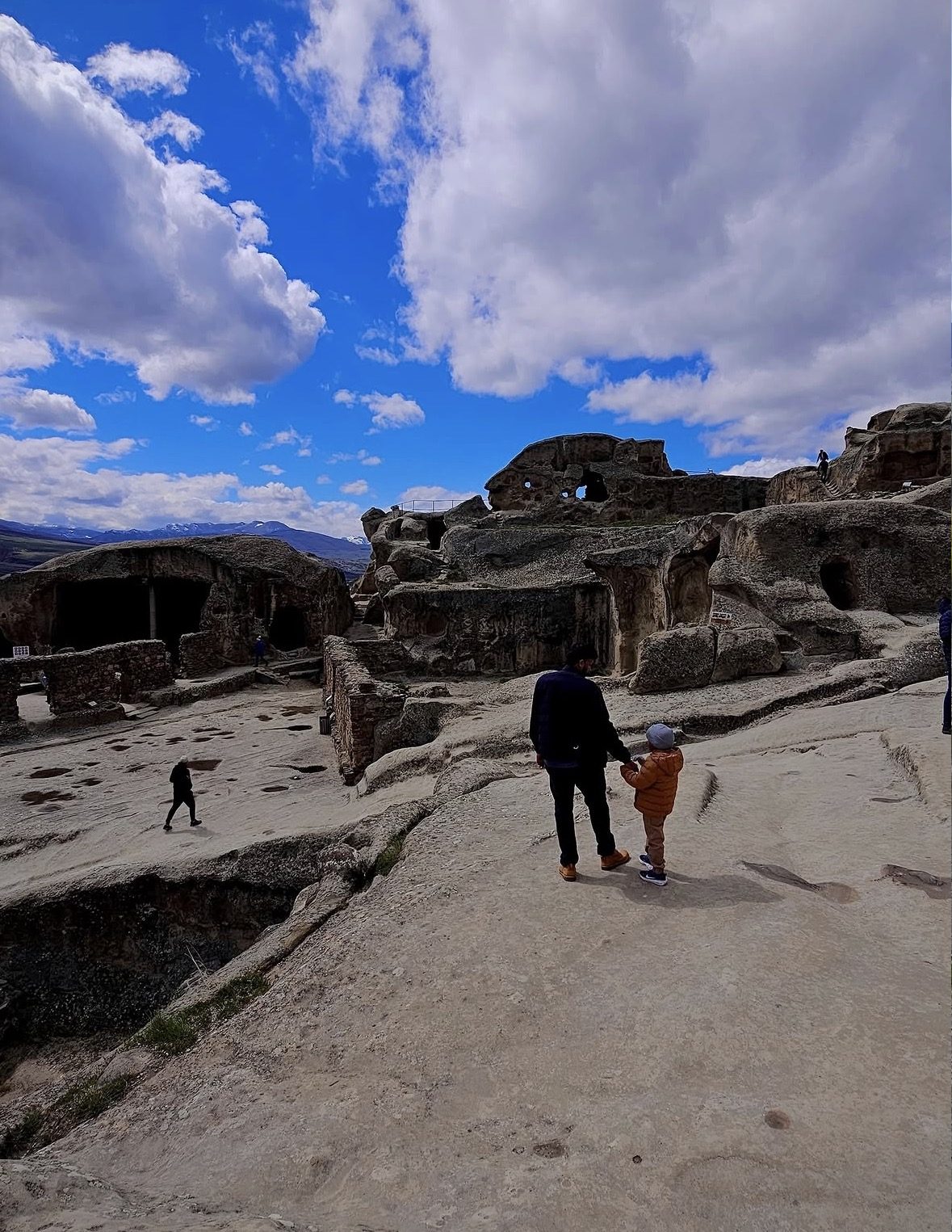
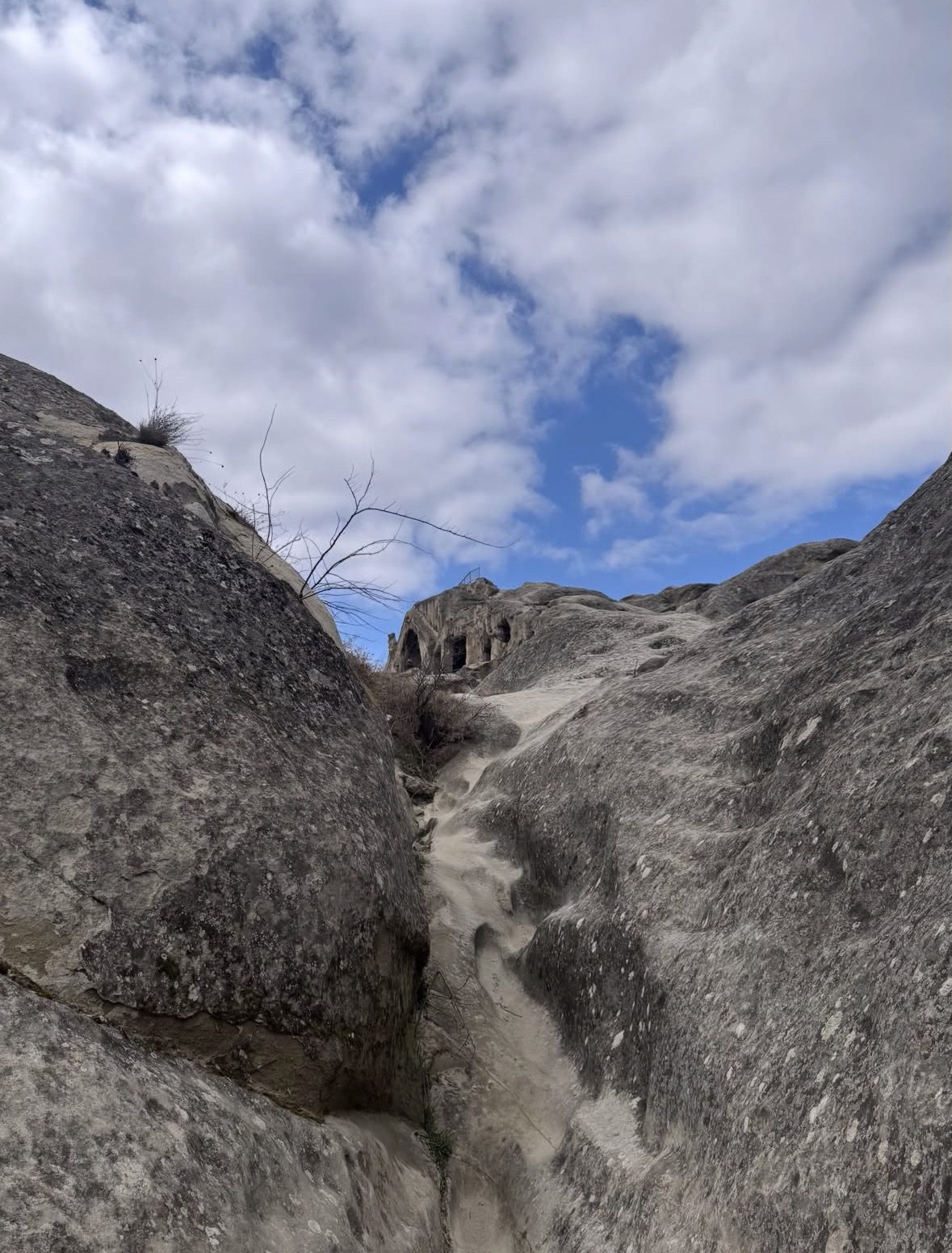
Today, Uplistsikhe is one of Georgia's most visited and cherished heritage sites, welcoming hundreds of thousands of visitors annually from across the globe. Located approximately 10 kilometers east of Gori and easily accessible as a day trip from Tbilisi, roughly 80 kilometers away, the site is managed as an open-air archaeological museum. Visitors can walk the ancient paved main street, peer into wine cellars where kvevri pits still punctuate the rock floor, admire the coffered ceilings of ceremonial halls, and stand inside the surviving 9th-century Christian church whose altar faces east toward the rising sun. Interpretive signage in Georgian and English helps contextualize the layered history visible at every turn, making the experience both immersive and educational.
Whether you are a history enthusiast, an architecture lover, or simply a curious traveler seeking experiences far beyond the ordinary, Uplistsikhe delivers an encounter with the deep past that is genuinely difficult to replicate anywhere else on earth. The site is best visited in the golden light of early morning or late afternoon, when the volcanic rock glows amber and the Mtkvari River shimmers far below the cliffs. Combine your visit with a stop at the nearby Stalin Museum in Gori for a full day of contrasting historical perspectives. Book a guided tour to unlock the stories hidden within each carved chamber, and prepare to leave with a profound appreciation for the tenacity and ingenuity of Georgia's ancient civilizations.
Ready to Experience It Yourself?
Don't let the layers of history at Uplistsikhe pass you by unnoticed — a knowledgeable local guide will bring every carved hall, pagan temple, and ancient wine cellar vividly to life. Our handpicked tour partners offer small-group and private day trips from Tbilisi, combining Uplistsikhe with the best of Shida Kartli in a single unforgettable journey. Browse our recommended tours below and secure your spot today — Georgia's most ancient city is waiting for you.
Book Your Tour Now